
Walkways and Gardens That Stay Visible After Dark
Low Voltage Outdoor Lighting in San Tan Valley for properties where pathways and landscape features disappear once the sun sets
Premium Pavers installs low voltage outdoor lighting systems across San Tan Valley that make walkways, entries, and planted areas visible and accessible after dark. The service matters for properties where outdoor features become difficult to navigate safely once natural light fades. You notice the difference immediately when steps, path edges, and garden borders remain clearly defined throughout the evening.
Low voltage systems operate at twelve volts rather than standard household current, which reduces shock risk and allows for simpler installation without heavy conduit requirements. The fixtures attach to transformer-controlled circuits that step down power from your main electrical supply. Placement focuses on areas where visibility directly affects safety or usability—step edges, grade changes, pathway borders, and entryway approaches.
Schedule a property walkthrough to identify specific placement for fixtures based on your current landscape layout.
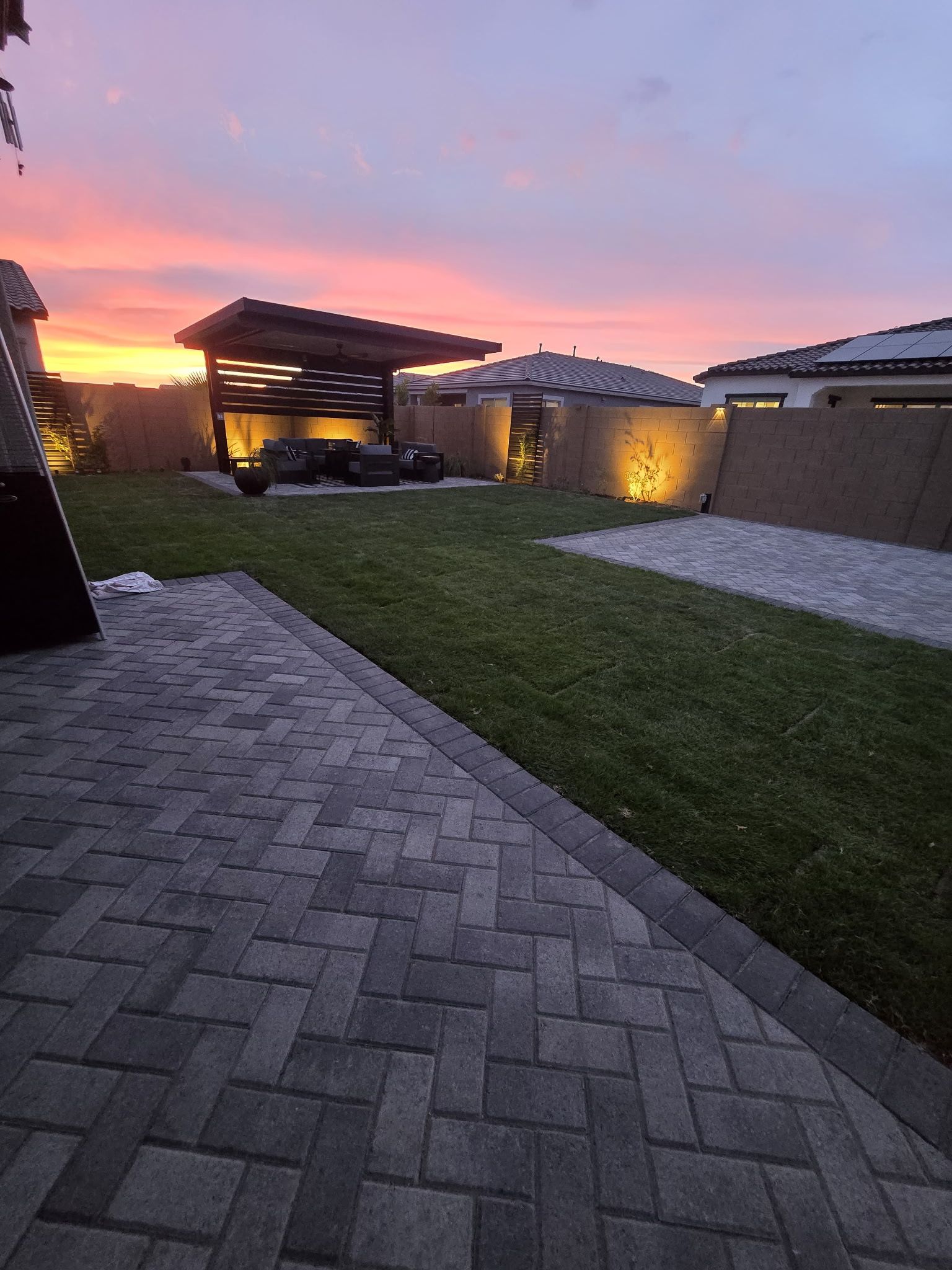
What Proper Lighting Placement Accomplishes
Fixture selection depends on what you need illuminated and how much ambient light already exists. Path lights typically stand fifteen to eighteen inches tall and space eight to ten feet apart along walkway edges. Uplighting targets specimen plants or architectural features, while downlighting from eaves or overhead structures casts broader coverage across patios or seating areas. Wire runs beneath mulch or soil, connecting each fixture back to the transformer location.
Once installation finishes, you see previously dark zones along your property line, garden beds, and walking surfaces clearly defined without glare or harsh spotlighting. Steps that blended into shadows now show distinct tread edges. Plants that disappeared completely after sunset become visible focal points. The system operates on a timer or photocell, activating automatically when daylight drops below a set threshold.
Transformer capacity limits how many fixtures a single circuit supports, typically ranging from one hundred to three hundred watts total. Larger properties may require multiple transformers positioned at different locations to avoid voltage drop across long wire runs. Bulb type affects color temperature and energy consumption—LED options use significantly less power and last longer than halogen alternatives.
Questions Before Starting Your Project
Here are answers to frequent questions about outdoor lighting installation.
How does low voltage lighting differ from standard outdoor fixtures?
Low voltage systems run at twelve volts instead of one hundred twenty volts, which reduces electrical hazard and allows installation without heavy conduit or electrician licensing requirements in most cases. The trade-off involves shorter maximum wire runs before voltage drop becomes noticeable.
What happens if a fixture stops working?
Individual fixture failure typically results from bulb burnout or moisture intrusion at the connection point. You replace the bulb or reseat the connection without affecting other fixtures on the same circuit. Wire damage from landscape equipment requires locating the break and splicing a repair section.
When should I run the lights each night?
Timers or photocell sensors automate operation based on sunset time or ambient light levels. In San Tan Valley, seasonal sunset variation shifts nearly two hours between summer and winter, so photocell activation adjusts automatically while timers require manual reprogramming.
How many fixtures does a typical walkway need?
Spacing depends on fixture brightness and path width, but most installations place fixtures every eight to ten feet along straight sections and closer together at curves or intersections. A fifty-foot pathway typically uses six to eight fixtures for consistent illumination without dark gaps.
What maintains visibility over time?
Fixture lenses accumulate dust and debris that reduces light output. Periodic cleaning with a damp cloth restores brightness. Plant growth may eventually block fixture beams, requiring trimming or repositioning to maintain the original lighting pattern.
Premium Pavers maps fixture placement during the initial site visit to address specific visibility concerns across your property. Contact us to arrange an evaluation of your current outdoor areas and lighting needs.
