
Living Surfaces That Survive Triple-Digit Summers
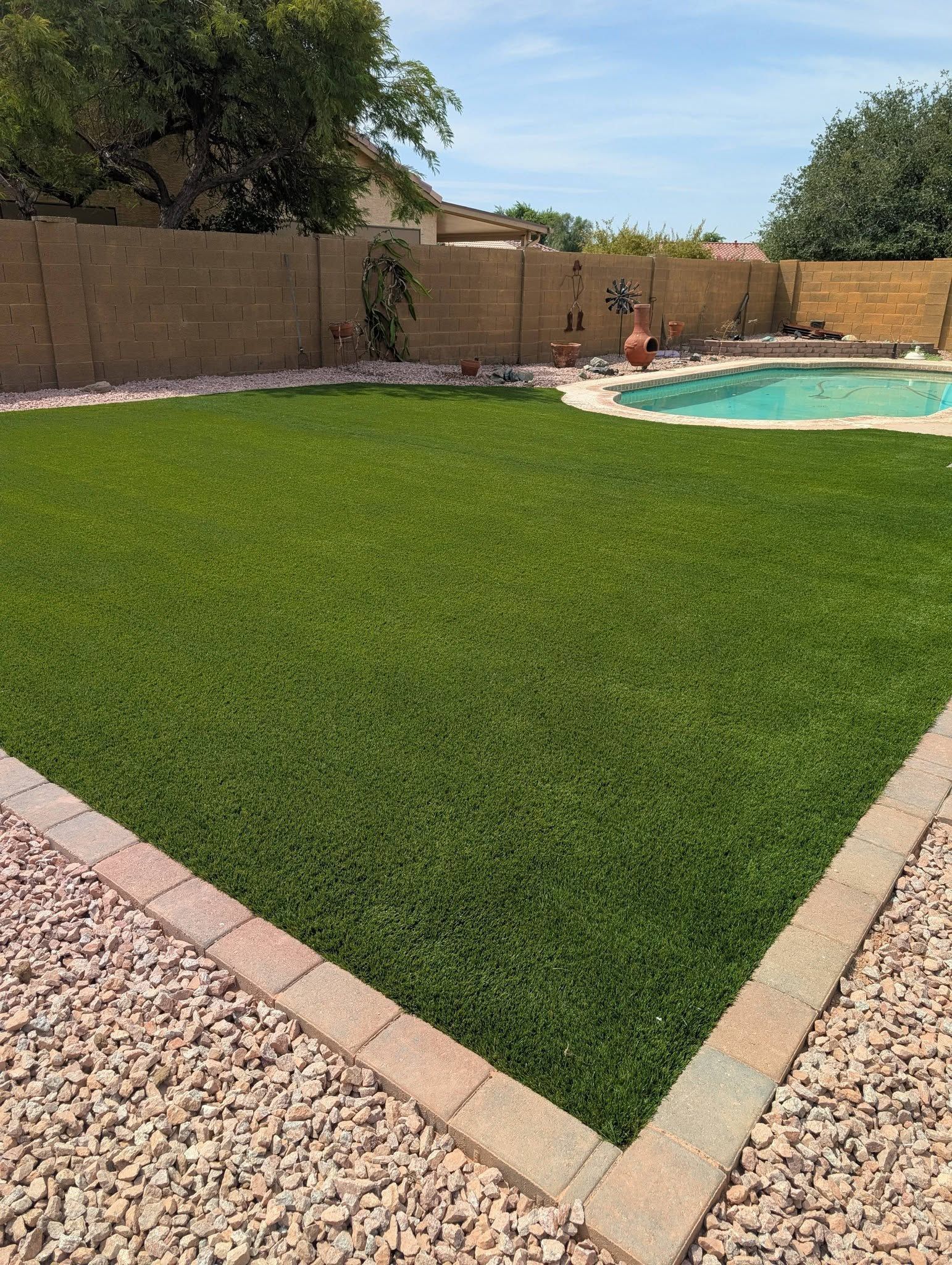
Turf Installation in San Tan Valley for properties requiring heat-tolerant grass that endures extreme temperature stress
Most cool-season grass varieties die within one summer in San Tan Valley, where surface temperatures exceed 110°F for months and low humidity accelerates moisture loss faster than typical turf species can replace it through root uptake. Species selection and establishment watering timing determine whether newly installed turf survives its first summer or burns out before root systems develop enough depth to access subsurface moisture. Premium Pavers LLC installs heat-tolerant turf varieties adapted to Arizona's temperature extremes and coordinates establishment irrigation with monsoon patterns and extreme heat windows that either support or destroy young grass.
The installation process begins with site grading to eliminate low spots where water pools and drowns roots, followed by soil preparation that incorporates organic matter into native soil to improve water retention without creating drainage problems. Sod or seed selection focuses on warm-season varieties sourced from regional nurseries that stock Bermuda, Zoysia, or Buffalo grass proven to tolerate sustained heat and recover from temporary drought stress common during Arizona summers.
Schedule a property evaluation to assess soil drainage and sun exposure patterns that affect turf species selection and establishment success.
What Changes After Turf Establishes Root Depth
Turf survival depends on root systems reaching sufficient depth before summer heat peaks, requiring establishment watering that keeps the top six inches of soil consistently moist without oversaturating. Installation timing coordinated with monsoon season allows natural rainfall to supplement irrigation during the critical root development period, reducing water demand during establishment. Site grading ensures water moves across the surface evenly during irrigation and monsoon rains, preventing erosion that exposes roots or pooling that suffocates them.
After roots establish, you notice grass maintains green color through summer heat rather than browning out, recovers quickly when watering resumes after brief drought stress, and tolerates foot traffic without thinning or dying back in high-use areas. Turf paired with properly designed irrigation delivers water at intervals that support deep root growth rather than shallow, heat-vulnerable root systems that develop under frequent light watering.
The work also includes coordination with hardscape edges to create clean transitions between turf and paver surfaces, preventing grade differences that complicate mowing and create tripping hazards. Soil depth under turf must allow root penetration while maintaining proper elevation relative to adjacent hardscape.
Answers to Frequent Service Questions
Installing turf in desert conditions requires understanding how climate stress, water availability, and species characteristics interact to determine long-term survival and maintenance requirements.
What turf varieties survive San Tan Valley summers without constant watering?
Bermuda grass tolerates extreme heat and recovers from drought stress better than most alternatives, while Buffalo grass requires less water overall but grows more slowly; both outperform cool-season varieties that die when temperatures exceed 95°F for extended periods.
How does soil preparation affect turf establishment success in Arizona?
Incorporating compost or organic matter into native soil improves water retention and root penetration, but excessive amendments create drainage problems during monsoon rains; a two-inch layer mixed into the top six inches balances moisture retention with drainage.
When should you install turf to avoid establishment failure during summer heat?
Late February through April allows root development before peak summer temperatures arrive, while September through October takes advantage of monsoon moisture and cooling temperatures that reduce heat stress during establishment.
How much water does newly installed turf require during establishment in San Tan Valley?
Daily watering maintaining top soil moisture for the first two weeks supports initial root growth, then frequency decreases gradually as roots deepen; total establishment period runs six to eight weeks before turf tolerates normal irrigation schedules.
What ongoing maintenance does Arizona turf require to stay healthy?
Mowing height adjustments by season maintain optimal blade length that shades roots during summer heat, while aeration every fall breaks up compacted soil and improves water penetration to deeper root zones.
Premium Pavers LLC pairs turf installation with irrigation system design, coordinating establishment watering schedules with controller programming to support root development through Arizona's climate challenges. Arrange a site consultation to review soil conditions, drainage patterns, and irrigation integration for turf that survives regional temperature extremes and water constraints.